In recent years, the need to produce clean steel has led to longer residence times for molten steel in ladles and tundishes, imposing new requirements on the refractory materials used in steelmaking. To extend the service life of the working lining, steel plants commonly replace nozzle well blocks and gas-purging plug blocks and perform localized repairs on ladle bottoms; for tundishes, nozzle replacement is the standard method for extending service life. Currently, plastic refractories are commonly used to fill the gaps around ladle well blocks and tundish nozzles. However, these plastic refractories suffer from high porosity, relatively low material quality, and poor slag resistance, posing significant safety risks. Consequently, steel plants are seeking to replace them with high-performance ramming masses. Based on an analysis of the application areas and functional requirements, the ramming mass should possess the following properties:
1) Ready for direct on-site use without the need for mixing;
2) Sufficient shelf life to facilitate on-demand use;
3) Appropriate strength—sufficient to secure the well block for safe operation while allowing for future excavation and repair;
4) Good slag resistance;
5) Good bonding with the overlying working lining.
Based on these considerations, this study developed a corundum-based ramming mass designed to fill the areas around ladle well blocks and tundish nozzles, meeting the operational requirements of steel plants.
Ramming mix design
The selection of raw materials and particle size distribution directly affects the installation and service performance of ramming mixes. Currently, the plastic refractory used for the ladle is an alumina-based system, while the castable for the working lining is a corundum-spinel system; considering factors such as cost and performance, a corundum-based ramming mix was ultimately selected. Brown fused alumina and white fused alumina possess high bulk density, low water absorption, and chemical inertness; using them as aggregates enhances the slag resistance and strength of the ramming mix. Fine alumina powder fills the micropores between aggregates, improving the material’s microstructure; furthermore, at lower temperatures, it reacts with the binder and silica fume present in the mix, thereby increasing density, strength, and erosion resistance. The addition of an appropriate amount of silica fume generates a controlled quantity of low-melting-point phases at medium-to-high temperatures, imparting a degree of creep resistance to the material—which is highly beneficial for stress absorption and microstructural densification—while also reducing residual and high-temperature expansion. Some existing ramming mixes utilize no binders, while others incorporate only small amounts of fluxing agents. The corundum-based ramming mix developed in this study is designed to be free of binders that harden at room temperature, relying instead on the formation of strong bonds during the heating process following installation. Based on a comparison of physical properties across different particle size compositions, as well as considerations regarding natural packing characteristics and installation requirements, the critical particle size was determined to be 5 mm, with a composition of 35% coarse particles, 25% medium particles, and 40% fine powder.
Development Process
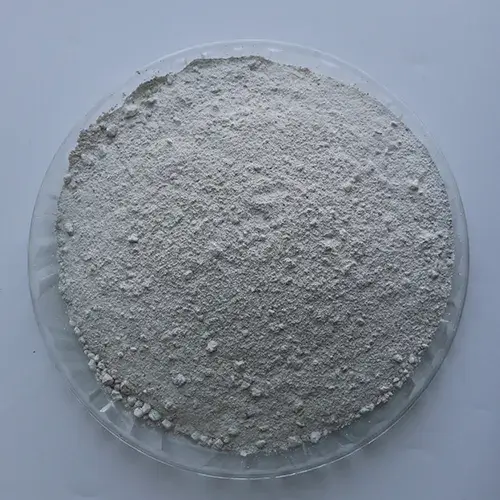
The primary raw materials include brown fused alumina, white fused alumina, alumina micropowder, and silica fume.
In addition to the primary raw materials, additives such as plasticizers, retarders, expansion agents, and binders are included. Furthermore, to ensure the ramming mass develops moderate sintering strength during use, small amounts of sintering aids were incorporated. The optimal dosages of binders and sintering aids were determined by comparing the compressive strengths of specimens prepared with varying amounts of these additives.
After preparing and thoroughly mixing the materials according to the designed proportions, the mixture was rammed into two types of specimens: bar-shaped specimens (40 mm × 40 mm × 160 mm) and crucible specimens (outer dimensions: 70 mm × 70 mm × 70 mm; inner hole dimensions: φ430/20 mm × 40 mm). The specimens underwent natural curing for 24 hours, followed by oven curing at 110°C for another 24 hours, before being demolded. Some of the dried bar-shaped specimens were subjected to heat treatment—soaking at 1000°C and 1550°C for 3 hours—to evaluate their permanent linear change rate upon heating, flexural strength, and compressive strength. The dried crucible specimens were tested using the static crucible method: 20 g of ladle slag was added, and the specimens were heat-treated at 1600°C for 3 hours. Afterward, they were cut along the central axis to measure the penetration area and calculate the penetration index (penetration area ÷ cross-sectional area of the original crucible hole center) × 100%.
Results and Analysis
① Bonding characteristics with the working layer
Ramming material was applied to the bottom of the mold, followed by the direct casting of the ladle bottom working layer castable over it. After heat treatment—consisting of holding at 110°C for 24 hours followed by 1550°C for 3 hours—the bonding interface between the ladle bottom castable and the ramming material was examined. The results indicate good bonding between the two materials under the tested conditions, with no signs of delamination or separation.
② Slag resistance
Calculations showed that the slag penetration resistance index was 112% for the working layer castable and 115% for the ramming material; the values are comparable. The slag resistance of the developed ramming material meets the requirements for use as a filler material around the seating block.
③ Shelf life
The shelf life of the ramming material should ideally be at least 30 days. In this study, the shelf life was adjusted primarily by varying the type and dosage of the retarder. The results demonstrated that using a combination of two retarders in a specific ratio yielded the best results.
Industrial trial
Based on the results of the aforementioned development tests, the performance indicators of the ramming material were further optimized.
The newly developed corundum-based ramming mix is currently in regular use at Baosteel’s No. 2 Steelmaking Plant, replacing the original plastic refractory in the area surrounding the tundish nozzle. The supplied material has a shelf life of over two months, exhibits excellent on-site workability and ease of removal, and fully meets the steel plant’s performance requirements. Future plans involve its application around the nozzle blocks and porous plug blocks of steel ladles.
Conclusion
Using brown fused alumina, white fused alumina, alumina micropowder, and silica micropowder as primary raw materials—and employing an optimized particle size distribution along with appropriate types and quantities of binders, plasticizers, expansion agents, sintering aids, and retarders—a corundum-based ramming mass was developed. This material features a long shelf life, bonds effectively with the ladle bottom’s working lining castable, and exhibits excellent slag resistance. The developed ramming mass has been successfully applied in steel plants, meeting on-site operational requirements.