
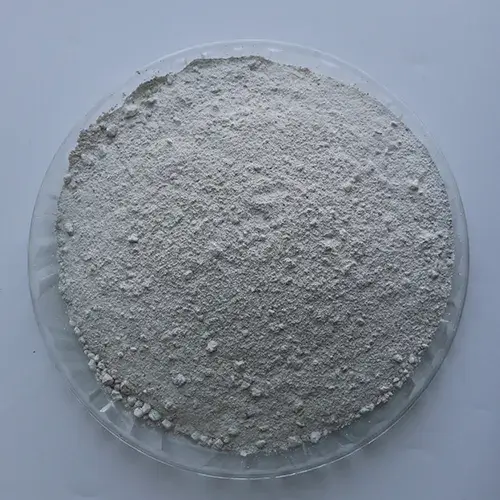
Refractory ramming mix is a semi-dry, loose refractory material formed by ramming. It is usually made of high-alumina granules and fine powders in a certain gradation and with the addition of an appropriate amount of binder. During construction, it needs to be rammed vigorously to obtain a dense structure.
Refractory ramming mixes have the following basic characteristics
(1) It possesses heat hardening, spalling resistance, abrasion resistance, and erosion resistance; adding tar to dolomite ramming mix enhances its hydration resistance; adding tar as a binder to graphite ramming mix provides good workability.
(2) It has a high service temperature, generally between 1450~1700℃.
(3) The bulk density of silicon carbide ramming mix should not be less than 2.2t/m³; the bulk density of dolomite and magnesia ramming mix with added tar should not be less than 2.9t/m³; the bulk density of high-alumina and magnesia ramming mix should not be less than 2.95t/m³.
(4) The ramming mix should be a finished product manufactured by a specialized company, and the finished ramming mix should have a certificate of conformity and instructions for use.
(5) The particle size of the ramming mix should be uniform, with a ratio of coarse, medium, and fine particles of approximately 4:2:4, and a maximum particle size between 5~7mm.
The applicable ranges of commonly used refractory ramming mixes are as follows
(1) High-alumina ramming mixes are suitable for the top of electric furnaces and the discharge port of rotary kilns, etc.
(2) Magnesia ramming mixes are suitable for the bottom of electric furnaces, open-hearth furnaces, and converters, etc.
(3) Dolomite ramming mixes are suitable for the bottom of converters and ferroalloy electric furnaces, etc.
(4) Graphite and silicon carbide ramming mixes are suitable for blast furnaces and molten iron channels, etc.
General provisions for the construction of refractory ramming mixes
(1) The substrate of the refractory ramming mix should be dried and cleaned.
(2) There are two types of carbon ramming mix: hot ramming mix and cold ramming mix. Cold ramming carbon ramming mix is recommended. Both hot and cold ramming carbon ramming mixes should be finished products.
(3) Before ramming, hot ramming carbon ramming mix must be crushed and uniformly heated. The heating temperature should be determined according to the mixing temperature of the finished product. There should be no hard lumps in the heated carbon ramming mix. A hot hammer should be used for ramming, and the material temperature should not be lower than 70℃. When ramming cold ramming carbon ramming mix, the material temperature should be about 10℃ higher than the softening point of its binder.
(4) When ramming the refractory ramming mix, the material should be spread evenly. When using a pneumatic ramming hammer, the thickness of each layer should not exceed 100mm, and each hammer blow should overlap the previous half-hammer, continuously and uniformly compacting each layer. The surface of the already compacted ramming mix should be roughened before the second layer is laid.
(5) The compaction density of each layer of carbon ramming material shall be checked according to the specified bulk density or compression ratio. When using compression ratio for checking, the compression ratio shall be: not less than 45% for the blast furnace bottom pad layer; and not less than 40% for the gaps between the masonry and the cooling wall (or furnace shell) and the slag and iron grooves.
(6) When ramming resumes after an interruption, the surface of the rammed material shall be cleaned, roughened, and coated with coal tar.
(7) Areas that fail visual inspection or sampling inspection after ramming shall be patched. The patched surface shall be smoothed with a shovel or other tools.
More details about Ramming Mass
What is a ramming mass?
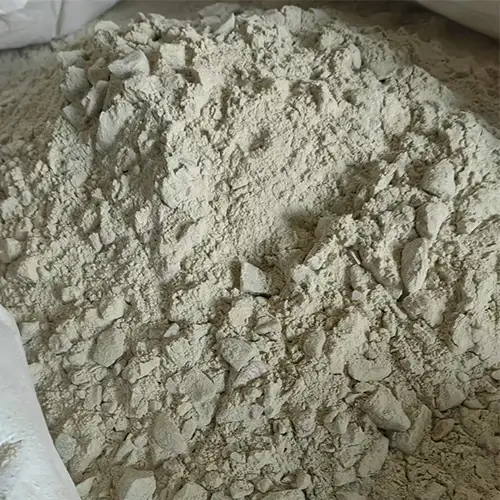
Ramming mass is a type of unshaped refractory material used to line the inner walls of induction furnaces, ladles, and other high-temperature processing units. It is usually made from crushed quartz (silica), magnesite, or alumina, depending on the intended use and furnace type.
What is high quality ramming mass?
A well-quality ramming mass must: Withstand crack due to sharp temperature changes. Resist corrosion and slag penetration. Provide high bonding with the furnace walls to achieve longer life.
What is ramming in foundry refractory mass?
Ramming mass is a dry, granular refractory material used to form the monolithic lining of induction furnaces, ladle bottoms and similar metal-melting vessels. It is rammed (compacted) in place around a former, then sintered by the heat of the first melt to form a dense, crack-resistant working lining.
What is the difference between castable and ramming mass?
Ramming mass and castable refractories both serve to create monolithic linings, but their application methods differ significantly. While ramming mass is installed dry and densely packed by ramming, castable refractories are mixed with water to form a flowable mixture that is poured into place and cured.
How to make ramming mass?
The production process of ramming mass involves the addition of 0.2 to 5.0% of Boric Acid, which enables the sintering of the crucible lining. Boric acid starts melting at 171 °C and separates to Boric oxide and water.