
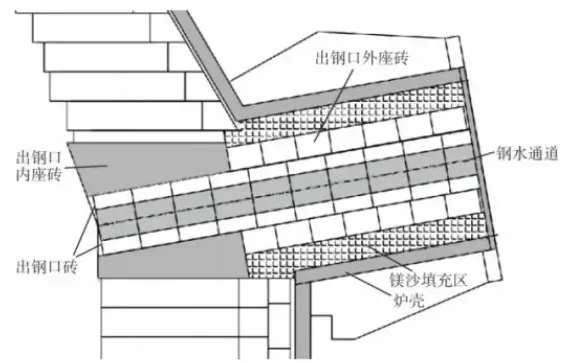
The converter taphole is a refractory channel in the converter. During tapping, molten steel is poured into the ladle through the taphole, as shown in Figure 1. When the taphole brick is partially damaged, the molten steel passes through the taphole brick and reaches the furnace shell area, causing the furnace shell steel plate at the flange-to-shell connection to melt through, resulting in slag and steel flowing out. After this happens, a large amount of lime is added to the remaining molten steel to adjust the slag, and then the remaining molten steel in the furnace is poured into the ladle from the large taphole to prevent large-area burn-out of the furnace shell. Because there are no slag-blocking measures at the large taphole, slag and steel are discharged together, resulting in severe phosphorus return in the slag, which can easily lead to high phosphorus content in the finished product and burnt-out of the taphole.
After steel penetration occurs at the tapping spout of the converter, an inspection of the tapping spout channel reveals obvious melting damage to the tapping spout bricks. The location of the steel penetration (or leakage) is shown in Figure 2.
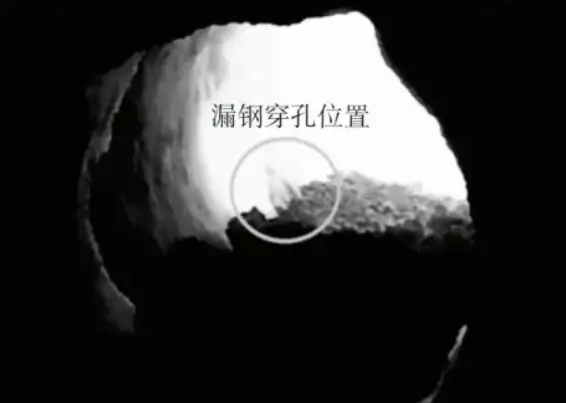
As shown in Figure 2, the steel penetration occurred approximately 200mm west of the inner side of the taphole. Partial cracks appeared in the refractory bricks of the taphole, allowing molten steel to leak through. The number of taphole penetration incidents ranged from 49 to 105.
Based on the analysis of the above-mentioned taphole penetration accidents in the converter, the main causes of taphole penetration in the converter are as follows:
1.Steel tapping angle
The tapping angle of a converter is typically designed between 0° and 15°. Most steel mills in China use a 0° tapping angle, while the Xichang 200-ton converter uses a 10° tapping angle. This 10° angle helps shorten the ladle car’s travel distance during tapping, improving efficiency. However, during tapping, the molten steel cannot fall freely vertically; it moves at an angle within the 10° channel, experiencing a force towards the rear of the furnace. This significantly increases friction at the tapping point, leading to increased stress. Furthermore, the vortices formed by the rotating steel flow during tapping exacerbate refractory erosion, easily causing pitting within the tapping channel. Since the tapping angle is difficult to improve, other measures must be taken to compensate for this deficiency.
2.Damaged seat bricks
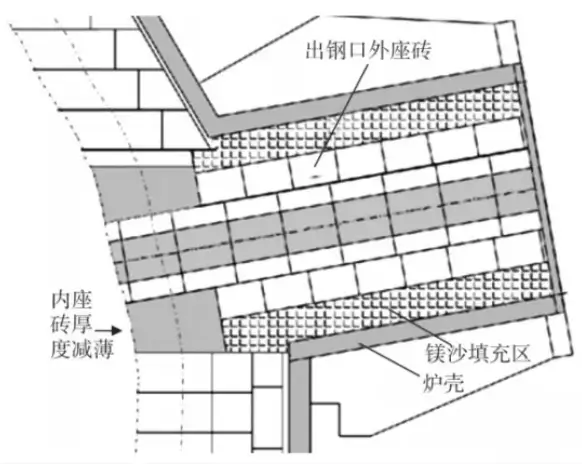
The refractory material thickness of the taphole seat bricks near the furnace interior exhibits a “thinner at the bottom, thicker at the top” trend, making the inner part of the converter a weak point. With each smelting furnace cycle, the converter’s refractory material is gradually eroded, and this erosion on the rear surface causes the seat brick thickness to gradually decrease. In the later stages of the converter’s service life, due to prolonged erosion by molten steel, the thinnest part of the refractory material on the rear surface is only 300-400 mm thick. At this point, the seat brick thickness inside the taphole is only about 100 mm. When subjected to the impact of taphole replacement, the seat bricks are prone to cracking, and their erosion resistance decreases. To extend the furnace’s lifespan, methods such as slag splashing, slag coating, and spraying are used to increase the thickness of the taphole and rear surface to 700-800 mm. However, at this point, the seat bricks at the taphole are essentially a bonded slag splash layer and a repair filler layer, with significantly lower erosion resistance than the original seat bricks.
Damage to the seat bricks is the root cause of steel penetration at the taphole. The damaged taphole bricks are in a high-risk state with incomplete shape and internal cracks. When maintenance is inadequate, high-temperature molten steel seeps out from the gaps in the base bricks. When the molten steel is over-oxidized, the over-oxidized molten steel reacts with the magnesia-carbon bricks in the gaps, which accelerates the erosion process and causes the base bricks to become loose, perforated, and damaged, as shown in Figure 3.
3.Water hammer effect in voids
During the tapping process, air bubbles adsorbed on the rough refractory surface rise to the surface. This causes the molten steel to fill the areas opposite to where the air bubbles have risen, creating an impact that erodes the refractory material. This phenomenon is called water hammer. Water hammer significantly affects taphole penetration at the taphole. Once taphole penetration occurs, the taphole bedding brick is essentially damaged, and the risk of further penetration increases significantly.
See Figure 4 for a schematic diagram of the damage to the taphole bedding brick.
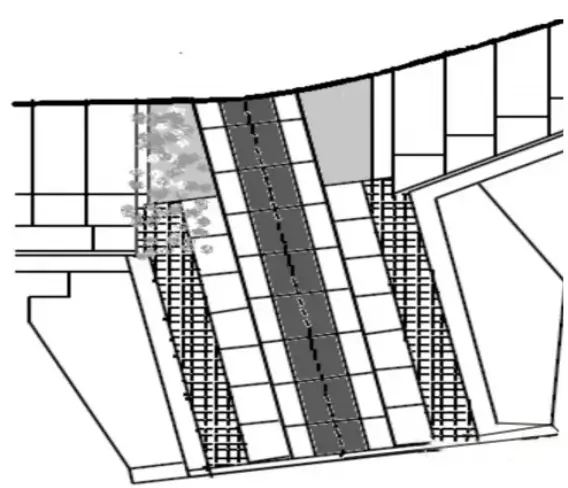
The dissection of the tapping area after furnace dismantling revealed a gap between the flange and the furnace shell, and the tapping channel. After re-boring the steel, the hole was filled with binding material, compacted with sprayed material, and finally moistened with sprayed slurry to create a dense binding layer in the previously leaky tapping channel. However, this binding layer was not as good as that of the magnesia-carbon bricks; the base bricks remained riddled with holes. When the brickwork inside the tapping area was not properly maintained, or when gaps formed between the tapping area and the base bricks, the water hammer effect was significant, making it extremely easy for steel leaks to occur again.
4.Sprinkler irrigation process and repair material quality
After the taphole is replaced, the gaps between the furnace lining bricks, the taphole outer seat bricks, and the taphole sleeve bricks need to be filled with repair material. The refractory material and water are mixed and sprayed through a spray gun to fill the gaps. The spraying process, such as the consistency and spray angle, significantly affects the density of the gap filling, thus noticeably impacting the number of times the taphole can be used.
The repair material used for filling the gaps undergoes boiling and evaporation of water at the residual temperature of the steelmaking converter (around 1000℃), and after a period of sintering, forms a dense sintered layer to meet the needs of steel smelting and scouring. The MgO content in the refractory material and the scouring resistance of the sintered material also significantly affect the number of times the taphole can be used.