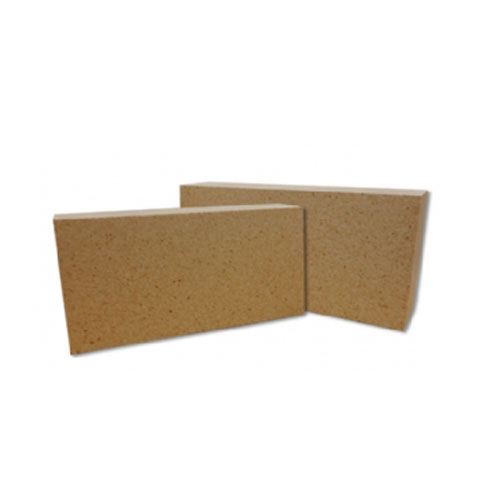
High-alumina bricks are aluminum silicate refractory materials containing an Al₂O₃ content of 48% or higher. Due to their high alumina content, they are classified as high-alumina refractory materials.
They can also be categorized into grades based on their Al₂O₃ content; for instance: First-grade high-alumina bricks contain >75% Al₂O₃; Second-grade high-alumina bricks contain 65%–70% Al₂O₃; and Third-grade high-alumina bricks contain 55%–60% Al₂O₃.
Properties of High-Alumina Bricks
- High Refractoriness: Generally, the refractoriness ranges from 1750°C to 1790°C.
- High Refractoriness Under Load (RUL): Typically ranges from 1400°C to 1520°C.
Due to their low impurity content, these bricks exhibit a high refractoriness under load. The high-temperature performance of high-alumina bricks is closely linked to the material’s microstructure; specifically, the high-temperature resistance of the matrix phase is significantly lower than that of the aggregate (grain) phase. Consequently, during service, molten slag tends to erode the matrix phase first. Therefore, the high-temperature service performance of the material can be enhanced by modifying and optimizing the matrix phase and the overall structural design.
- Good Slag Resistance:
High-alumina bricks possess a high Al2O3 content, rendering them nearly neutral in character. The slag resistance of high-alumina materials improves as their Al2O3 content increases; however, their resistance to alkaline slags is generally lower than that of basic refractory materials. Reducing the impurity content is beneficial for improving slag resistance. Additionally, increasing the material’s bulk density and reducing its porosity are effective measures for further enhancing its resistance to slag corrosion.
- Good Thermal Stability:
These bricks exhibit a low coefficient of thermal expansion. However, the thermal shock resistance of high-alumina bricks is generally inferior to that of clay bricks—a characteristic closely tied to the material’s mineral composition. Specifically, Grade I and Grade II high-alumina bricks tend to have poorer thermal shock resistance than Grade III bricks. In the manufacturing process, thermal shock resistance is often improved by optimizing the material’s grain structure characteristics or by incorporating specific quantities of additives—such as synthetic cordierite (2MgO·2Al2O3·SiO2) or other minerals—into the batch composition.
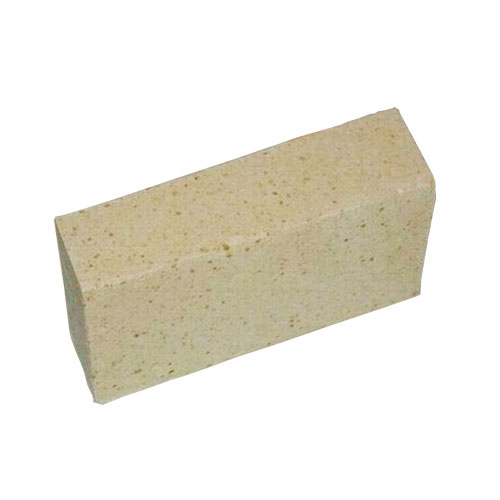
Technical Specifications of High-Alumina Bricks
High-alumina bricks are classified into five grades—LZ-80, LZ-75, LZ-65, LZ-55, and LZ-48—based on their physicochemical properties.
The Development of High-Alumina Bricks
In recent years, numerous research and production entities in the field of refractory materials have devoted significant effort to the development of high-alumina bricks. Through the incorporation of various minerals or chemical additives, they have successfully enhanced the performance characteristics of these bricks. Furthermore, the adoption of synthesis or electrofusion techniques has proven effective in improving the composition of high-temperature crystalline phases—and consequently, the high-temperature properties—of high-alumina bricks, thereby expanding their scope of application. Several specialized series of high-alumina refractory materials are introduced below.
Spalling-Resistant High-Alumina Brick
Anti-spalling high-alumina bricks are refractory products manufactured using high-alumina bauxite as the primary raw material. They are produced by incorporating a small amount of ZrO2, adding a specific quantity of composite binders and additives, and controlling the particle size distribution of the batch mixture, followed by molding and high-temperature firing. In contrast, traditional high-alumina bricks constitute a specific type of refractory material wherein the main chemical constituent is Al2O3.
The physicochemical properties of anti-spalling high-alumina bricks primarily encompass indicators such as alumina (Al2O3) content, bulk density, apparent porosity, cold crushing strength, refractoriness under load, and thermal shock stability. Based on their chemical composition, these bricks are classified into two categories: one category consists of anti-spalling high-alumina bricks containing ZrO2 (designated model GKBL-70), while the other consists of anti-spalling high-alumina bricks free of ZrO2 (designated model KBL-70).
Product Features: (1) High refractoriness (maximum service temperature); (2) Refractoriness under load (at 0.2 MPa) exceeding 1500°C; (3) Excellent thermal shock resistance, withstanding more than 25 cycles of water quenching from 1100°C; (4) High cold crushing strength, exceeding 60 MPa; (5) Low apparent porosity and excellent volume stability at high temperatures; (6) Superior resistance to spalling; (7) Good resistance to chemical corrosion.
Product Applications
Spalling-resistant high-alumina bricks are characterized by strong resistance to spalling, high refractoriness, excellent resistance to thermal shock, and robust corrosion resistance. Furthermore, they offer resistance to corrosion from potassium, sodium, sulfur, chlorine, and alkaline salts, alongside low thermal conductivity. These properties make them an ideal material for the transition and decomposition zones of cement kilns; they are also suitable for use in other kiln components, such as kiln hoods and coolers. Currently, the primary application for spalling-resistant high-alumina bricks remains within cement kilns.
Low-Creep High-Alumina Brick
Low-creep high-alumina brick is a type of high-alumina refractory brick; characterized by its low creep rate, it is specifically referred to as “low-creep high-alumina brick” and is utilized in high-temperature industrial kilns operating within prolonged high-temperature environments. Today, we will explore the properties and applications of low-creep high-alumina bricks.
The characteristics of low-creep high-alumina bricks include:
- Low creep rate and excellent volume stability at high temperatures. Under conditions of constant temperature and constant load, high-alumina bricks undergo minimal internal structural changes over time, maintaining their volume stability within high-temperature environments.
- Good resistance to gas erosion and corrosion. In high-temperature environments, low-creep high-alumina bricks not only maintain their volume stability but also exhibit excellent resistance to gas erosion, resulting in a long service life.
- High compressive strength and good wear resistance. Low-creep high-alumina bricks are capable of withstanding significant gas pressures and resisting the impact of dust particles carried within the gas flow.
Low-creep high-alumina bricks represent an improvement upon standard high-alumina refractory bricks. By incorporating specific refractory raw materials designed to minimize creep—added to the original manufacturing formula—and through the precise control of the molding and firing processes, these bricks are endowed with a distinctively low creep rate.
Applications of Low-Creep High-Alumina Bricks:
Standard low-creep high-alumina bricks are commonly used in blast furnace hot blast stoves, as well as in other types of industrial kilns. Furthermore, to meet specific construction requirements, these bricks can be manufactured in various specifications and dimensions—such as checker bricks, special-shaped bricks, and anchor bricks—and are primarily utilized in industrial kilns operating under prolonged high-temperature conditions.